
Duncan Grant
Duncan Grant - A Famous Scottish Painter
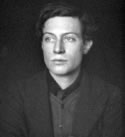 Duncan Grant (1885 - 1978) Duncan James Corrowr Grant was born on 21st January 1885, in Rothiemurchus near Inverness. He was the son of an army officer and spent his early childhood in India and Burma. In 1894, at the age of nine, he returned to England and lived with his uncle, Sir Richard Strachey. While studying at St. Paul's school, London, his artistic skill soon became apparent and he was given private drawing lessons. In 1902 - 1904 he attended Westminster School of Art.
His first contact with some of the artists of the Bloomsbury Group, including John Maynard Keynes, was around 1905, after an introduction by his cousin Pippa Strachey, at a meeting of the Friday Club. The summer of 1905 was spent with his cousin Lytton Strachey (with whom it is said that he had a homosexual relationship).
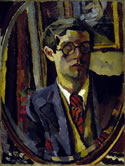 In 1906 he moved to Paris, France. He was given a letter of introduction from the French artist Simon Bussy and while there he attended La Palette School (1906–7), Paris which was run by Jacques Emile Blanche. It would appear that Grant did not have much money, when he had left London he had been given £100 by a sympathetic aunt, as he lived in an attic room in a cheap hotel and spent his spare time copying paintings in the Louvre. However he was able to meet some very important people such as the British artists Wyndham Lewis, Henry Lamb and Augustus John. He also met and became friends with several writers including the American writer Gertrude Stein and Virginia Woolf. Virginia would visit Grant with her brother Adrian and her sister Vanessa who had recently married Clive Bell.
He returned to London and studied at Slade School (1907–8) and in 1909 he moved to 21 Fitzroy Square. He attended the gatherings of Virginia and Adrian Stephen's and in 1913 he became a co-director of Roger Fry & Vanessa Bell's short lived "Omega Workshops". In 1914 he and Vanessa started a relationship and they moved to Charleston to live with Grant's lover David 'Bunny' Garnett. A complicated arrangement to outsiders as Vanessa was still married to Clive and, although their relationship seemed over, he still visited at weekends! At a time when homosexual acts were a criminal offence Grant was clearly Bi-sexual (which still has a stigma for many, including homosexuals, to this day). However this did not cause problems with Vanessa as they remained together until her death in 1961. There was clearly some problem with public opinion (remember that Oscar Wilde had been jailed in 1895) as Vanessa's daughter, Angelica, was initially led to believe her father was Clive. Even in this, apparent, age on enlightenment, the sexual relations of Duncan Grant remains of great interest to many.
Duncan and Vanessa worked together on many projects and the Bloomsbury Group were in great demand in the 1920's. It was in 1920 that Grant had his first solo exhibition (he continued until his death in 1978). The Bloomsbury Group were renowned as the most influencial artists of their day. Unfortunately World War II saw an end to this but their influence continues today.
Summary:
After a cosmopolitan training in the art circles of London, Paris and Italy, Duncan Grant was one of the first British painters to be caught up in the Post-Impressionist revolution. His own work was for years a synthesisof the colour of Henri Matisse and the controlled design of the later Cubists. This was apparent from 1913 in the designs produced for Roger Fry's short-lived Omega Workshops. In the inter-war years grant's style became more naturalistic, though retaining a hold on colour and formal design, so that he was probably the only artist of stature who was closely associated with the Bloomsbury Group, even if his work sometimes suffered from his passion for sensibility and good taste.
Back to