
Stirling Castle
|
View more Scottish Regions
About Stirling Castle
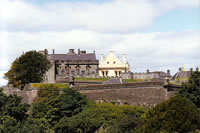 A visit to Stirling without a visit to Stirling Castle would be incomplete. The image of Stirling Castle is one which stirs the emotions, set on a high volcanic rock the castle dominates the surrounding countryside. Today, if you stand below the steep sided natural defenses you can get a sense of the formidable challenges that would be invaders would have to face. However, to get a true picture, you must image the scene way back when the castle was in use. Then the surrounding countryside was void of all the modern embelishments and to the west was a large area of marsh land and everywhere else was wide open. The marsh helped protect the castle which had clear views for miles in all directions.
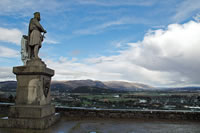 Today you can visit the castle and experience it first hand. The visitor centre is your starting point and where you should purchase the Official Souvenir Guide. The centre offers an introductory film but it is far better to spend your time exploring the castle. Free guided tours depart just outside which leave every hour on the hour, also available (for a few pounds) is a, six language, audio guide which is extremely useful.
Allow yourself plenty of time to explore Stirling Castle. The very young, elderly or disabled will find it rather tiring but there are plenty of places where you can sit and rest. A camera should be considered essential because you will soon discover a multitude of photo-opportunities and superb views across the surrounding countryside and, if you look closely, you can still see the remans of the Royal gardens below the west side of the castle.
The Early History of Stirling Castle
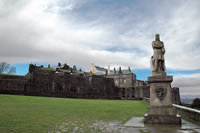 The rock, upon which the castle stands, was formed about 350 million years ago through a volcanic fissure. The very early history of the site is not known but can be assumed. Other surrounding hills show evidence of prehistoric forts so it is reasonably safe to assume that such a fort once stood on this magnificent vantage point.
The earliest period that we have any knowledge of Stirling is in the seventh century when, it is believed, The Anglians of Northumbria gained control of the area. It is also known that Kenneth mac Alpin, King of the Scots from 842, had a stronghold here.
The first documented evidence comes in the twelfth century when King Alexander I had a chapel dedicated and endowed at Stirling Castle and the castle is where he died in 1124. At this time the castle would no longer be functioning as a soley military building. Instead it would have been performing a number of purposes including being the Royal residence and as such having suitable accommodation for the King and his court together with areas for entertainment. It would also have been the place in which all of the administrative officers would have been housed.
Stirling Castle has changed hands many times throughout it's turbulent history. It was one of the castles which King William the Lion (of Scotland) surrendered to Henry II of England but it was returned in 1189 under the Treaty of Falaise. William died at Stirling Castle in 1214.
More about Stirling Castle:
Just click on the small photograph or title to discover more about Stirling Castle.
 |
 |
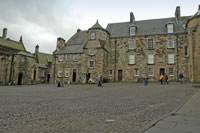 |
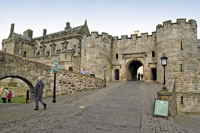
| The Outer Defences | The Forework | The Kings Old Building |
 |
 |
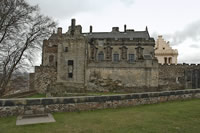 |
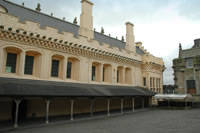
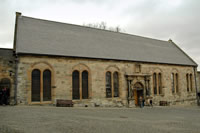
| The Great Hall | The Chapel Royal | King James V's Palace |
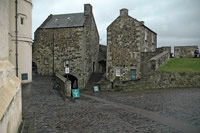 |
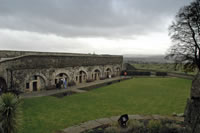 |
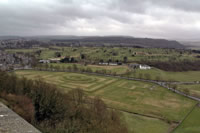 |
| The Great Kitchens | The Magazines | The Royal Gardens |
 |
 |
|
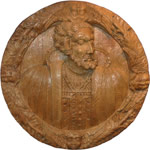
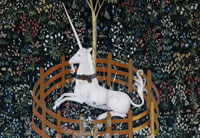
| The Stirling Heads | The Tapestries |